
Aerospace Test Data Acquisition Solution
Provides end-to-end data acquisition solutions for aerospace equipment such as aircraft, engines, satellites, and UAVs—including structural static/fatigue testing, engine bench testing, wind tunnel experiments, and flight tests. The system features industrial-grade wide-temperature design, EMC certification, and redundant data backup, meeting aviation quality management standards.
Learn moreAerospace Test Data Acquisition Solution
Professional test and measurement solutions to accelerate industry digital transformation
Aerospace Test Data Acquisition Solution
Provides end-to-end data acquisition solutions for aerospace equipment such as aircraft, engines, satellites, and UAVs, including structural static/fatigue testing, engine rig testing, wind tunnel experiments, and flight tests. The system features industrial-grade wide-temperature design, EMC certification, and redundant data backup to meet aviation quality management standards.
6 Tough Challenges
- Extreme temperature, humidity, and pressure:Alternating between high-altitude low-temperature/low-pressure and ground-level high-temperature/high-humidity conditions poses severe challenges to sensor drift and equipment reliability.
- Strong electromagnetic interference:Engine ignition, radar transmission, and communication equipment generate intense EMI, compromising signal integrity.
- High Vibration and Shock:Connectors and cables are prone to loosening or failure during takeoff, landing, turbulence encounters, and engine operation.
- Zero Tolerance for Data Security:Flight test data is irreplaceable; any loss could cause project delays or safety risks.
- Multi-parameter synchronization accuracy:Supports nanosecond-level synchronization of multi-signal types (temperature, vibration, pressure, strain) to meet modal analysis and flutter testing requirements.
- Airworthiness Certification Compliance:Avionics equipment must comply with DO-160G environmental standards, while ground equipment must meet the AS9100 quality management system requirements.
FIDES Q Product Overview
The FIDES Q Series is a high-reliability data acquisition product line designed specifically for aerospace testing. Featuring aviation-grade connectors and shielded cables, it delivers EMC performance compliant with MIL-STD-461G. Built-in redundant storage and power-loss protection ensure zero data loss even in extreme conditions. Supports IRIG-B timecode synchronization for precise alignment with flight recorders, telemetry systems, and other external equipment.
6 Major Core Advantages
- Industrial-grade wide-temperature design:Operating range: -40°C to +85°C, designed for extreme conditions from high-altitude cold to ground-level heat.
- EMC Electromagnetic Compatibility Certification:Full shielding design and filtering circuitry for immunity against strong electromagnetic interference; signal-to-noise ratio exceeds 100 dB.
- Redundant Data Backup:Real-time dual-media mirroring with power-loss protection to ensure data integrity until the final moment.
- Nanosecond-level multi-channel synchronization:IEEE 1588 PTP + IRIG-B dual-mode time synchronization with accuracy better than 100ns
- Airworthiness Standard Compliance:Meets DO-160G airborne equipment environmental conditions and AS9100 aviation quality management system requirements
- Lightweight, compact design:Compact and lightweight, ideal for airborne installation and space-constrained test rigs
3 core test scenarios
1. Aircraft Structural Testing
Perform static loading and fatigue testing on primary load-bearing structures such as the fuselage, wings, and tail. Synchronously collect data from hundreds of strain gauge channels to monitor structural deformation and stress distribution in real time. The system supports a sampling rate of 512kS/s to precisely capture transient signals associated with crack initiation and propagation. Integrated with Digital Image Correlation (DIC) technology for full-field strain measurement and validation.
2. Advance system testing
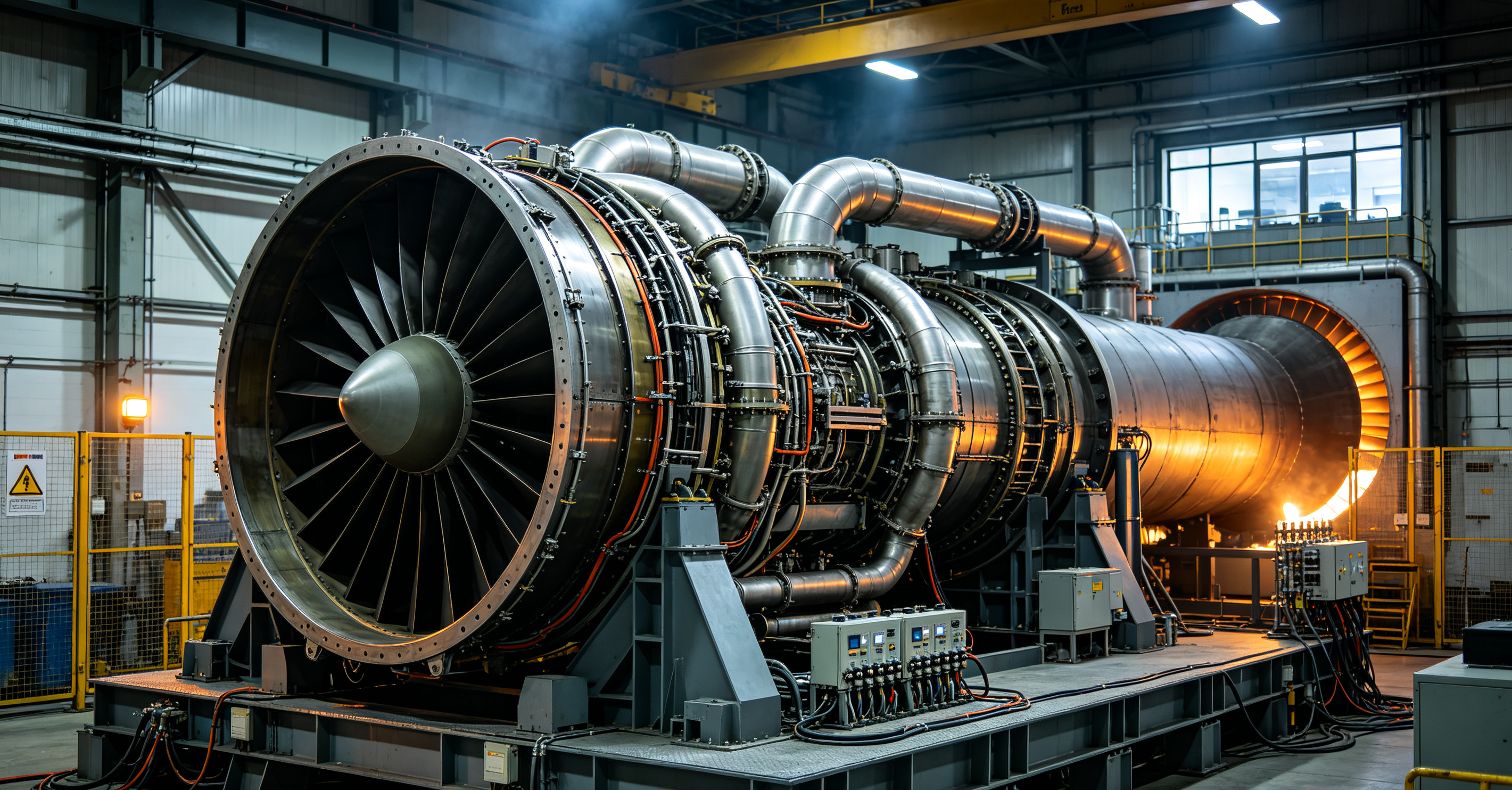
Collects key parameters such as speed, thrust, fuel flow, exhaust temperature, and vibration during engine test bench trials. High-frequency response captures unstable phenomena like surge and rotating stall, providing data support for optimizing engine control laws. Heat-resistant sensors and insulation designs accommodate the high-temperature environment of the engine compartment.
3. In-flight testing
A lightweight data acquisition unit mounts directly inside the aircraft to record aerodynamic loads, structural responses, and system status during flight. It supports IRIG-B timecode synchronization with flight recorders for post-flight data correlation. Redundant storage and power-loss protection ensure test flight data integrity.
System Architecture
Offers portable, distributed, and rack-mounted system architectures to meet diverse testing requirements:
- Portable:All-in-one chassis; ideal for field trials and small test benches. Rapid deployment with plug-and-play readiness.
- Distributed:Multi-node networked deployment for large-scale structural testing and multi-zone synchronized measurement
- Rack-mounted:Standard 19-inch rack mount; ideal for lab benchtop setups and long-term monitoring.
Solution Overview
Provides end-to-end data acquisition solutions for aerospace assets such as aircraft, engines, satellites, and UAVs, including structural static/fatigue testing, engine bench testing, wind tunnel experiments, and flight tests. The system features industrial-grade wide-temperature design, EMC certification, and redundant data backup to meet aviation quality management standards.
Use Cases
- •Aircraft Structural Static and Fatigue Life Testing
- •Aircraft Engine Test Bench Performance and Vibration Testing
- •Wind Tunnel Aerodynamic Force and Pressure Distribution Data Acquisition
- •Real-time Recording and Analysis of Flight Test Telemetry Data
Industry Pain Points and Challenges
Gain deep insights into industry testing challenges and receive tailored solutions.
Severe sensor drift under extreme temperature, humidity, and pressure conditions
Strong electromagnetic interference distorts signals, reducing data reliability.
Connectors and cables are prone to failure under high-vibration shock conditions.
Data security and integrity are critical; data loss is not permitted.
Stringent accuracy requirements for synchronized multi-parameter (temperature, vibration, pressure, strain) measurements
Key Advantages
Advanced technology driving superior test and measurement experiences
Industrial-grade wide-temperature design: operates from 40°C to +85°C in extreme high-altitude and ground environments
EMC Electromagnetic Compatibility Certification; Shielding Design for Strong Interference Resistance
Redundant data backup ensures zero data loss.
Nanosecond-level multi-channel synchronization meets modal analysis and flutter test requirements
Compliant with AS9100 Aerospace Quality Management System and DO-160 Avionics Equipment Standards
Lightweight, compact design for airborne installation and space-constrained scenarios
Typical Use Cases
Covers core industry testing requirements to support the entire R&D and production lifecycle.
Aircraft Structural Static and Fatigue Life Testing
Aircraft Engine Test Bench Performance and Vibration Testing
Wind Tunnel Aerodynamic Force and Pressure Distribution Data Acquisition
Real-time Recording and Analysis of Flight Test Telemetry Data
In-orbit Environmental Monitoring and Verification for Satellite Payloads
UAV Flight Control System Sensor Calibration and Testing
Technical Specifications
High-performance parameters for demanding test environments.
Customer Success Stories
Real-world success stories that help customers succeed
Static test of a commercial aircraft main wing
Leading domestic commercial aircraft manufacturer
The new wide-body aircraft's main wing requires an ultimate load static test to verify structural strength and design margins. The test involves over 300 loading points and more than 500 strain measurement channels, with all channels requiring a synchronization error of less than 200 ns.
The FIDES Q series rack-mounted acquisition system uses 8 cascaded chassis to achieve synchronized data collection across 512 channels. IEEE 1588 PTP protocol ensures nanosecond-level synchronization accuracy, while redundant storage mechanisms safeguard test data integrity. SeeDeria software displays real-time strain contour maps to assist in monitoring the loading process.
Successfully completed the 150% ultimate load static test. Structural response deviated less than 5% from finite element predictions, providing critical test evidence for type certification of the new aircraft model.
Aircraft Engine Test Bench Performance Testing
State-owned Aviation Engine Research Institute
New turbofan engine test benches require simultaneous acquisition of over 50 parameters, including speed, thrust, fuel flow, and vibration. During engine operation, intense electromagnetic interference causes severe signal distortion in conventional acquisition equipment.
Deploy FIDES Q series acquisition modules featuring full shielding and EMI filtering to effectively suppress electromagnetic interference. 512kS/s sampling rate precisely captures surge transient signals, with IRIG-B time code synchronized to the test stand control system. High-temperature sensors withstand engine bay environments above 200°C.
Successfully captured the complete transient process of 3 surge events, providing critical data for engine stability boundary calibration and advancing project completion by 2 months.
Drone Flight Control System Sensor Calibration
Military UAV Development Organizations
New long-endurance UAV flight control systems require calibration of IMU, pitot tubes, and altimeters during flight tests. With limited onboard space, strict weight constraints, and the need for precise time synchronization with the flight computer.
The FIDES Q series portable data logger weighs only 800g and features a compact design for aircraft installation. IRIG-B timecode synchronization with the flight control computer ensures precise alignment of sensor data and flight control commands. Redundant storage preserves complete data even in the event of unexpected power loss.
Completed flight calibration trials for 20 sorties. Sensor calibration accuracy met design requirements, and the flight control system successfully passed finalization review.
In-orbit environmental validation of satellite payload
Research Institute under the China Aerospace Science and Technology Corporation
Prior to launch, satellite payloads must undergo ground testing in thermal-vacuum and mechanical environments. During these tests, temperature ranges from -100°C to +150°C, rendering standard data acquisition devices inoperable.
Uses the FIDES Q series wide-temperature acquisition module, operating from -40°C to +85°C. Compatible with external thermal control for extreme conditions. Low-power design minimizes heat dissipation to avoid affecting temperature fields during thermal vacuum testing. Wireless data transmission eliminates cable feedthrough sealing issues inside the vacuum chamber.
All environmental verification tests were completed successfully. The payload performance met mission requirements, and the satellite was launched into orbit on schedule.
Need a custom solution?
Our technical experts will provide a tailored data collection solution based on your specific needs, offering full support from requirements analysis to system deployment.